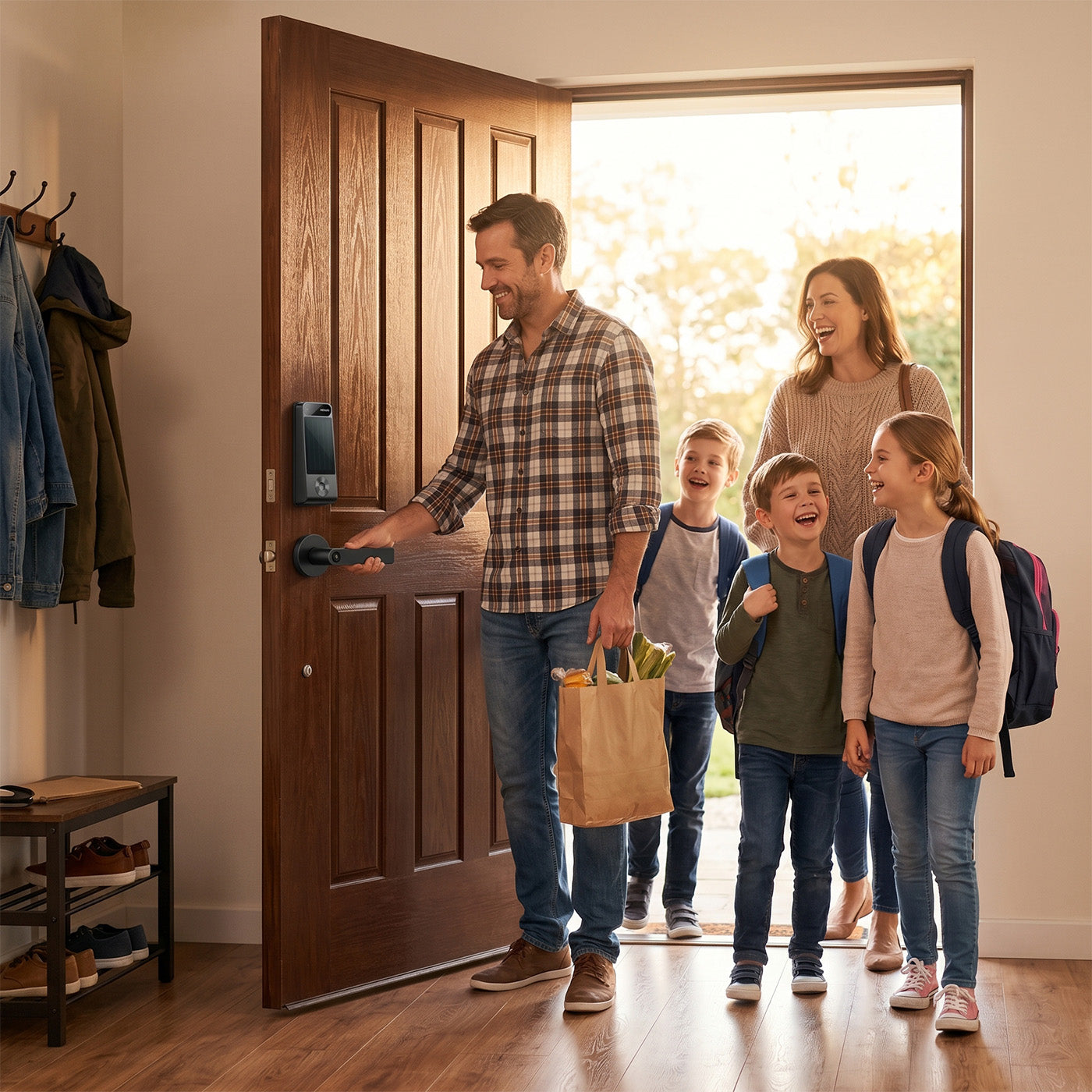

Freezing rain can occur anytime between November and April, and it often creates more problems than regular snow. One of the most frustrating issues homeowners face during this season is a frozen front door lock that suddenly refuses to open when you need it most. A thin layer of ice can seal a keyhole shut or jam internal lock components, leaving you stuck outside in freezing temperatures.
This article explains why this happens, how to prevent it, and what you can do if your lock freezes. More importantly, it also introduces a smarter, modern alternative that can help you avoid the problem altogether.
How Freezing Rain Affects Your Door Lock
Freezing rain occurs when rain falls through a layer of cold air near the ground, causing the droplets to freeze instantly upon contact with surfaces. Unlike snow, which can often be brushed away, freezing rain forms a smooth, hard glaze of ice that tightly bonds to whatever it touches.
Door locks are especially vulnerable for several reasons. Most locks are made of metal, which conducts cold quickly and allows ice to form and persist. Exposed keyholes are particularly vulnerable because they provide a direct opening for moisture to enter the lock mechanism.
Even a thin layer of ice can stop a lock from functioning. You may find that the key inserts but will not turn, or that it turns only partially before getting stuck.
First Preventive Step:
The most practical first step to reduce this risk is to install an overhead cover above your front door, such as an awning or door canopy. This structure does not eliminate freezing rain, but it significantly reduces direct exposure. By limiting how much ice forms directly on the lock, it lowers the chances of a fully frozen keyhole and helps keep the locking mechanism more functional during winter storms.
When Basic Protection Isn’t Enough
Even with an overhead canopy in place, freezing rain can still reach your lock under certain conditions. Strong winter winds often push icy rain sideways instead of letting it fall straight down. When this happens, moisture can still enter the keyhole, gradually freeze, and block access despite your preventive measures.
Adding a small lock cover can provide extra protection by physically shielding the keyhole from moisture and ice. However, in extreme cold, the cover itself can freeze in place, making it difficult to open when you need access to the lock.
If your lock is already frozen and you urgently need to get inside, warm water can be used as a resort. Pour a small amount of warm (not boiling) water over the keyhole to melt the ice and free the mechanism. This should be done carefully and in moderation, because very hot water can damage internal components or cause rapid refreezing of moisture inside the keyhole once temperatures drop again.
A Simpler, Smarter Way to Deal with Frozen Locks
Rather than constantly fighting ice buildup, many homeowners are turning to smart locks as a more reliable winter solution. The key advantage is simple: smart locks reduce or eliminate reliance on a physical keyhole.
Even if ice forms on the exterior of the door, you may still be able to unlock it using:
- A mobile app
- A keypad
- Other non-mechanical access methods
Because there is no need to insert and turn a metal key, frozen cylinders become far less of a problem. In many cases, you can unlock the door without touching the icy lock at all.
Smart locks also offer added benefits such as activity logs, auto-locking, and remote access, which can be particularly helpful.
How to Choose a Smart Lock for Cold Weather Conditions
Many people assume that all smart locks will perform exactly the same in cold weather, but that is not true. Some smart locks struggle in freezing temperatures because their internal components, batteries, or touchscreen systems are not designed for extreme cold.
Here are the most important factors to consider when buying a smart door lock for winter:
1. Operating Temperature Range
When selecting a winter-friendly smart lock, the first thing to check is its operating temperature range. A reliable lock should be able to function well below freezing point, not just in mild winter conditions. If a manufacturer does not clearly state the temperature range, that can be a warning sign.
2. Battery Performance
Battery performance is another important factor to consider. Cold weather drains batteries faster, so a good smart lock should be power-efficient and provide low-battery alerts before the lock stops working. Some models also include an emergency power option, such as a USB port, which can be extremely helpful during winter.
3. IP Rating
Always prefer smart door lock models that provide reliable weather protection. Look for a lock with a solid IP rating, which shows how well it resists dust and water. Since freezing rain and melting snow can seep into exposed parts of the lock, proper sealing helps prevent internal damage or malfunction.
4. Multiple Unlocking Mechanisms
Consider whether the lock offers multiple unlocking methods. In extreme colds, one method may fail while another still works. Having options like a keypad, mobile app, or fingerprint can make a real difference when winter conditions become unpredictable.
A Cold-Resistant Option: DESLOC D110 Plus Smart Lock
One smart lock designed with challenging environments in mind is the DESLOC D110 Plus Smart Lock. It is built to handle temperature extremes and moisture exposure that commonly cause problems during freezing rain events.
- Wide Operating Temperature Range: The DESLOC D110 Plus is rated to operate from -22°F to 158°F, making it suitable for regions with harsh winters as well as hot summers.
- Strong Battery Performance: The D110 Plus is engineered with efficient power management to maintain consistent battery performance in low temperatures, reducing the risk of sudden lock failure during prolonged winter weather.
- IP54 Protection Rating: With an IP54 rating, the lock offers protection against dust and water splashes from any direction.
- 6-in-1 Unlocking Methods: The D110 Plus supports six unlocking options, including PIN code, IC card, fingerprint, voice control, physical key, and app.

Conclusion
Freezing rain can turn a simple keyhole into a big problem, and quick fixes do not always work when temperatures stay low. Smart locks offer a more dependable solution because you can still unlock the door using a keypad or mobile app, even when ice affects the keyhole. If you live in a cold area, choose a smart lock such as the DESLOC D110 Plus Smart Lock that comes with a wide operating temperature range and IP54 protection.