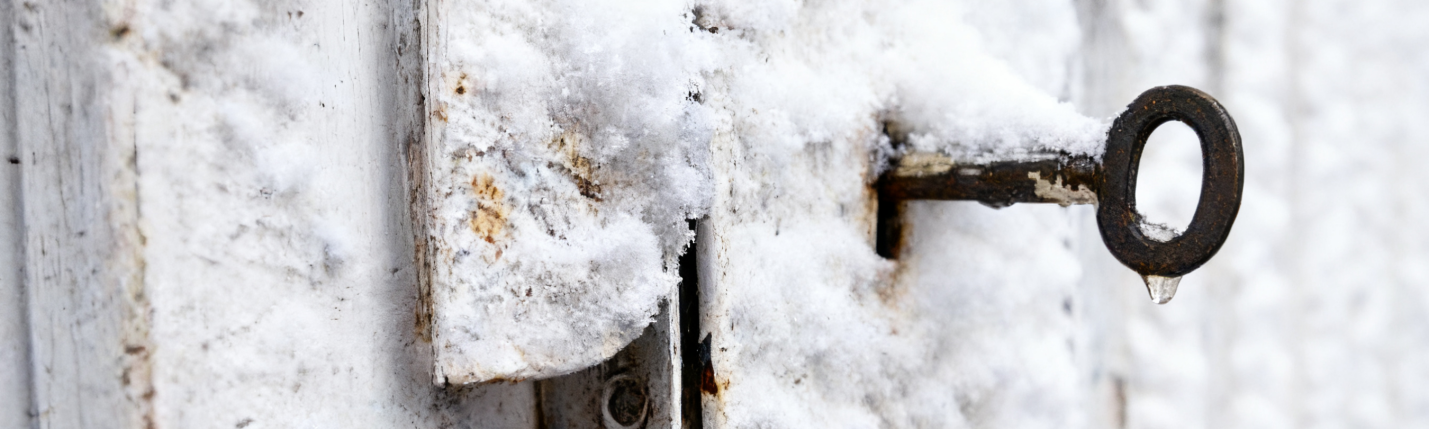
It is a freezing morning, and you find yourself standing outside, trying to open a door lock that refuses to move. The key feels stiff between your fingers, and the unforgiving winters only makes things worse. The situation is indeed frustrating, but the solution is simple.
This guide will walk you through quick and safe methods to unlock a frozen lock within minutes, so you can get back to comfort without standing at the door.
Step-by-Step Ways to Unlock a Frozen Door Lock
Here is how to unlock a frozen door lock in no time:
Warm the Key Before Inserting It
Rub the key between your palms or keep it in an inner pocket for a minute so body heat raises the metal temperature.
If you are indoors, hold the key under warm running water for a few seconds and dry it thoroughly before use. Insert the warm key slowly, then wiggle it gently until it turns freely. This is likely to melt any ice inside the lock so you can open the door with ease.
Use a Commercial Lock De-Icer
A small spray of commercial lock de-icer often solves the problem quickly. These products use alcohol to dissolve ice inside the keyway. Spray a short burst into the frozen lock, wait ten to twenty seconds, then try the key. Carry a travel-size de-icer in winter so you can use it wherever needed.
Apply Rubbing Alcohol or Hand Sanitizer
Rubbing alcohol and hand sanitizer are great alternatives to de-icers. The alcohol helps melt ice and displaces moisture that may freeze inside the lock. Apply a small amount directly to the key or keyhole. Wait a minute for the alcohol to take effect before attempting to turn the key.
Warm the Lock with Hair Dryer / Heat Pack
Use a hair dryer to direct warm air at the lock for a couple of minutes. Hold the dryer a few inches away from the keyhole to thaw the ice inside. Alternatively, a heat pack placed near the lock can gently warm the area, making it easier to turn the key.
Use Straw or Compressed Air
Compressed air or a straw can also help by blowing warm air into the keyhole. If you have a can of compressed air, spray it into the lock to loosen any ice. Otherwise, blow gently through a straw to warm up the lock.
Use a Thin Tool Carefully
For light frost buildup, a thin tool like a paperclip or pick can also help break up the ice. Insert the tool gently into the keyhole to dislodge the frost. Be cautious not to apply too much force, as this could damage the lock.
Common Mistakes to Avoid
However, there are some common mistakes that you must avoid while trying to open the frozen lock in a hurry:
- Don’t pour boiling water on the lock. Boiling water might seem like a quick fix, but it can warp the metal and damage the door’s finish.
- Don’t force the key. If the key is stuck, twisting or pulling it too hard can break it inside the frozen lock. So don't use too much force, otherwise it can lead to expensive replacements.
- Don’t use open flames (lighters, matches) directly on the lock. Using direct flames on the frozen lock poses a fire risk and can damage both the lock and door.
- Don’t ignore recurring freezing. Repeated temporary fixes without a proper solution can damage the lock’s internal parts. If you frequently face lock freezing, inspect the lock and lubricate it regularly to prevent future freezing.
Preventing Your Door Lock from Freezing Again
Here are some preventive measures that you can apply to stop your door lock from freezing again:
Lubrication: Graphite or Silicone Spray
To prevent future freezing, lubricate the lock regularly with graphite or silicone spray. Apply the lubricant to the keyhole and lock’s moving parts every few months, or before winter, to help resist freezing.
Protective Covers: Keyhole Caps, Tape, or Simple Storm Covers
Use keyhole caps or storm covers to shield the keyhole from snow and rain. These simple covers help keep moisture out. If you don’t have a cap, tape can work as a temporary solution to block the keyhole and prevent it from freezing.
Keep Keys and Spares Warm Indoors
Keep your keys and spares in a warm indoor spot so they don’t freeze or become brittle in the cold. This ensures they are always ready to use when needed.
Routine Inspection After Wet Weather
After snow or rain, inspect your lock and door area for ice buildup. Wipe away moisture to prevent freezing, so that the door remains functional in days to come.
When to Replace Aging or Corroded Locks
If your lock is showing signs of wear or rust, it may be more prone to freezing. Inspect your lock regularly, and replace it if it is damaged or corroded. A new lock will provide better protection against freezing.

Smart Door Locks: A Long-Term, Weatherproof Solution
While there are a number of ways a frozen door lock can be opened, all of them are only temporary methods. The most effective long-term way to prepare for such situations is to use the weatherproof smart locks that are not affected by external environmental factors. Here is how using a smart door lock is a good approach:
Benefits: Keyless Entry Eliminates Traditional Keyholes and Freezing Issues
Smart locks solve the problem of frozen locks by eliminating traditional keyholes. With keyless entry, you can unlock your door using a PIN, fingerprint, or mobile app, which prevents freezing issues caused by moisture buildup in keyholes.
Access Options: PIN, Fingerprint, Mobile App — Reduces Lockout Risk
Since smart locks offer multiple access options, including PIN codes, fingerprints, and mobile apps, they significantly reduce the worry about keys getting frozen or lost. This means that you can quickly unlock the door during freezing temperatures without trying to figure out the lock in chilling temperatures.
Weatherproof Design Features to Look For
When selecting a smart lock, look for features like moisture-resistant casings, seals around the keyway, and reliable battery life in cold temperatures. These design features help prevent freezing and ensure the lock operates smoothly in all weather conditions. One highly reliable, durable and weatherproof lock in this regard is the DESLOC D110 Plus.
DESLOC D110 Plus
The DESLOC D110 Plus Smart Lock is designed to handle the harsh weather elements without losing performance. Built with BHMA Grade 3 certification and an IP54 rating, it is engineered to remain dependable in rain, frost, or high humidity.
The ClimaGuard protection system seals out dust, moisture, and corrosion, while anti-condensation technology prevents internal fogging, which is a common cause of freezing in conventional keyholes.
Tested across 240 hours of salt exposure, 100,000 operation cycles, and 3,000N impact strength, the lock endures harsh outdoor conditions from -22°F to 158°F with consistent reliability.
Its PowerMax battery system powers the unit for up to six months on four AA batteries, with an emergency Type-C power port for backup. Even during severe winter, you can unlock your door instantly without waiting for batteries to recharge. A low-battery alert also ensures you never get locked out unexpectedly.
The DESLOC D110 Plus also combines weather resistance with advanced security. The Anti-Peeping keypad hides your passcode by letting you enter random digits around it, and the Anti-Hijacking Alarm can silently send emergency alerts through the DESLOC app if a forced entry is attempted.
Conclusion
A frozen lock can be fixed in minutes with simple DIY steps and a bit of care. Regular maintenance prevents future issues, while upgrading to a weatherproof smart lock like the DESLOC D110 Plus keeps your home secure and reliable through every season. Visit our website to explore more smart lock solutions!