A solar powered smart lock can make front-door maintenance easier, but the word “solar” is not a guarantee that every entrance is a good fit. Light conditions, door dimensions, backup access, and weather exposure still matter. Before you choose one, use these seven checks to decide whether solar-assisted charging fits your home and daily routine.
1. Look at the Light Around Your Door
Start at the exact spot where the outside lock will sit. Check it in the morning, at midday, and in the evening. Direct sunlight is helpful, but it is not the only usable source.
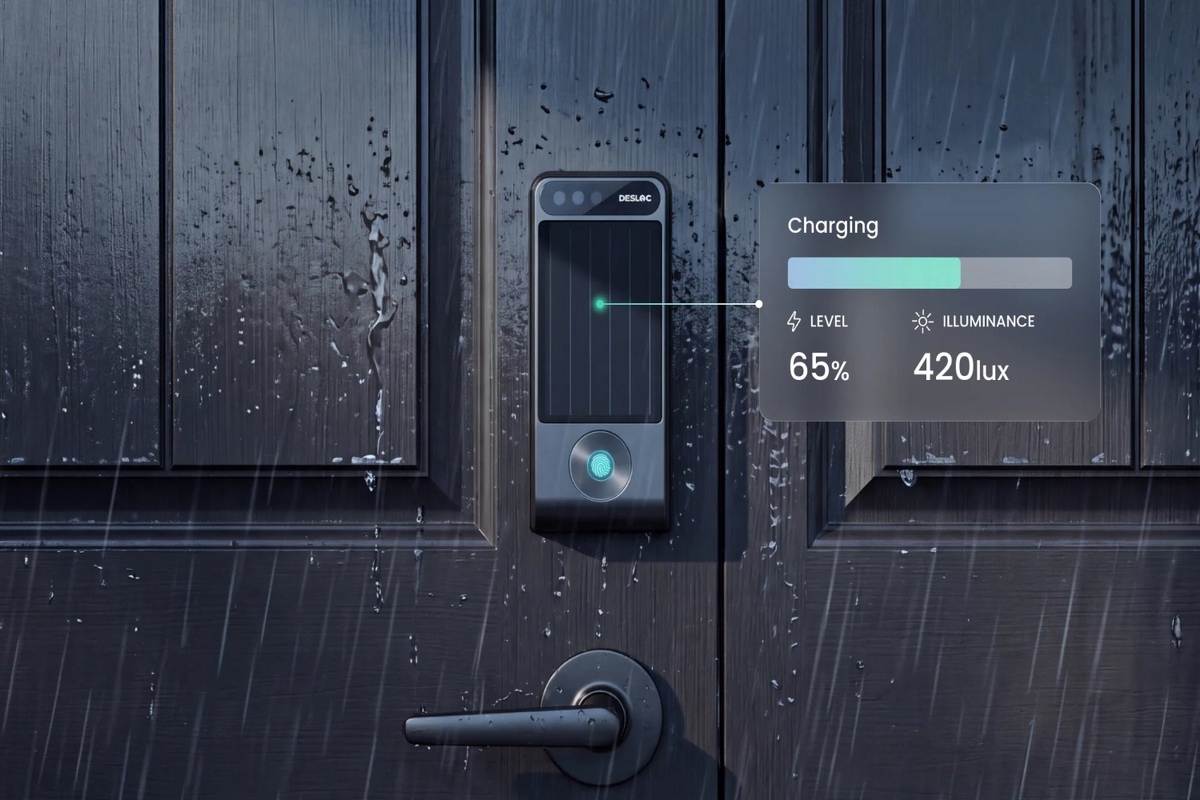
The DESLOC V150 Plus uses a perovskite solar panel designed to collect energy from sunlight and ambient light, including cloudy or shaded conditions. A covered porch or north-facing entry may still work if it receives consistent daylight. A completely dark corridor will not support solar charging.
Because exposure changes with seasons, trees, awnings, and storm doors, think of solar charging as a way to reduce manual charging rather than eliminate battery checks.
2. Check the Battery Behind the Solar Feature
A solar panel supports the lock, but the rechargeable battery powers everyday operation. The V150 Plus has a 10,000 mAh rechargeable battery. DESLOC states that it can provide more than six months of normal use without solar charging, although actual battery life will vary with traffic, Wi-Fi activity, temperature, door alignment, and access habits.
Its light-sensing algorithm and battery management system regulate charging and power use. This combination matters more than a solar panel alone because it determines how collected energy is stored and used.
3. Make Sure You Have a Backup Way In
No smart lock should depend on one entry method. Before buying, ask what happens if your phone is unavailable, your fingerprint does not scan, or the battery is depleted.
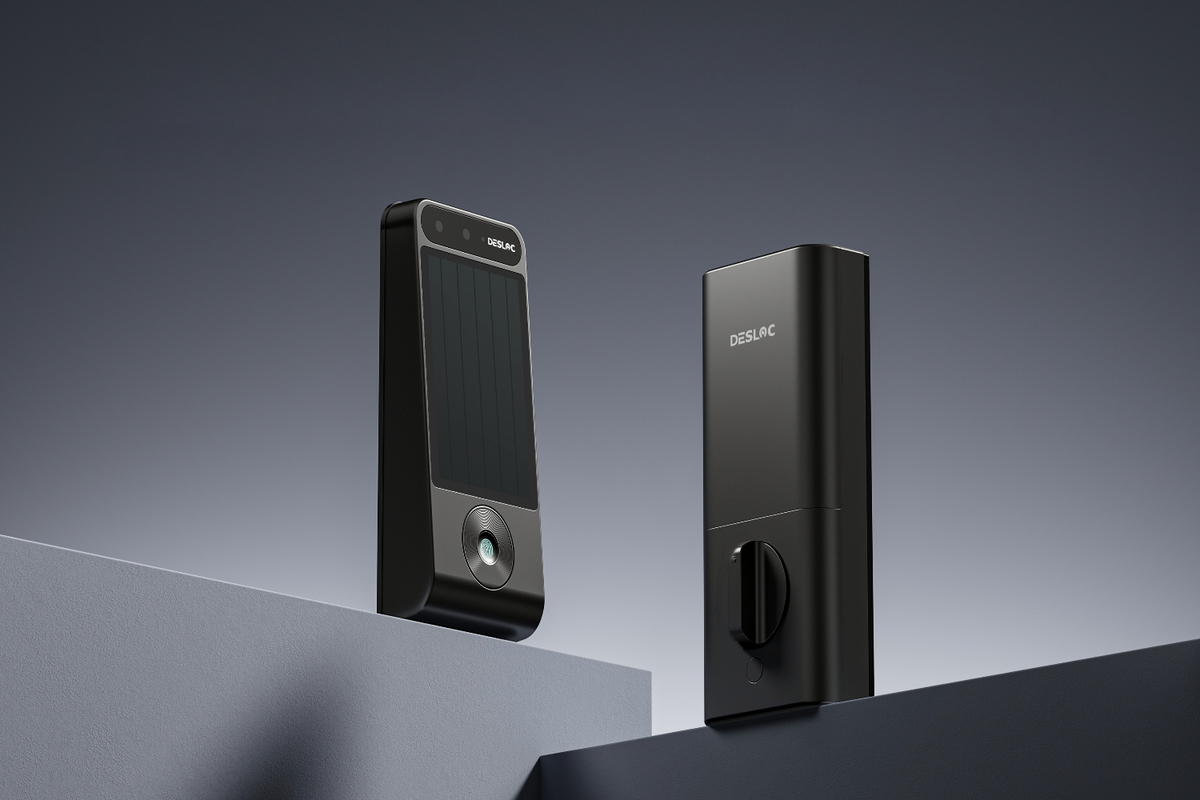
The V150 Plus includes two mechanical keys and an exterior USB-C emergency-power connection. A compatible power bank can temporarily power the lock so you can unlock the door. We recommend keeping one key somewhere safely accessible outside the locked home and testing every backup method after installation.
4. Confirm That It Fits Your Door
The V150 Plus is a deadbolt, so check your existing deadbolt opening, door thickness, backset, and the clearance around both assemblies. Decorative trim, blinds, raised panels, or a nearby handle can interfere even when the main bore fits.
Also test the door itself. The deadbolt should move into the strike plate without forcing, lifting, or pulling the door. Poor alignment makes the motor work harder and may increase power use. Review the official installation manual before drilling or changing an existing opening.
5. Match the Access Methods to Your Household
More unlocking methods are useful only when they solve real situations. The V150 Plus combines infrared 3D facial recognition, a curved fingerprint sensor, app control, compatible voice control, and mechanical keys. It stores up to 50 faces and 50 fingerprints, and biometric data is stored locally.
Think about who uses the door:
- Face recognition can help when your hands are full.
- Fingerprint access suits frequent household members.
- Built-in Wi-Fi supports remote management, alerts, and activity records without a separate gateway.
- The door sensor can report door status and support automatic locking after the door closes.
Choose the methods your household will actually use, then enroll and test every regular user.
6. Check Weather Protection, Not Just the Word “Outdoor”
The V150 Plus exterior assembly is rated IP65 and is listed for operation from -22°F to 158°F (-30°C to 70°C) in non-condensing conditions. IP65 means dust-tight protection and resistance to water jets under test conditions. It does not mean the lock can be submerged or pressure-washed.
If your entrance experiences heavy condensation, flooding, or temperatures outside the listed range, contact support before ordering. A good overhang, drainage, and stable door alignment also help any exterior smart lock work reliably.
7. Compare Maintenance, Support, and Current Terms
When comparing a solar-powered smart lock with a conventional battery model, compare maintenance patterns rather than marketing promises.
A replaceable-battery lock may suit a dark entry and a household that prefers a predictable battery-change routine. A solar-assisted model may be better when the door receives regular light and you want fewer charging tasks. In both cases, low-battery monitoring and backup access remain essential.
Before ordering, confirm the current price, shipping estimate, return terms, warranty, included hardware, and installation requirements on the live product page. The V150 Plus page currently displays conflicting warranty durations in different sections, so we recommend confirming the applicable term with DESLOC support instead of relying on either number.
Is the V150 Plus Right for Your Front Door?
The V150 Plus is worth considering if your entrance receives regular ambient light and your household values hands-free face access, fingerprint entry, built-in Wi-Fi, and fewer charging tasks. It is less suitable for a completely dark location or a door that does not meet the installation requirements.
Our practical checklist is simple:
- Observe light at the lock position throughout the day.
- Confirm door fit and deadbolt alignment.
- Decide which access methods your household needs.
- Review weather exposure and operating temperatures.
- Test the key and USB-C emergency-power options.
- Check the current product, return, and warranty details.
Solar charging should make ownership easier, not create unrealistic expectations. That approach reflects our goal of Making Life Better with Technology: using useful innovation to remove everyday friction while keeping the limits clear.
If a solar-powered smart lock matches your entrance, review the V150 Plus product details and installation guide before making your decision.
Frequently Asked Questions
Does the V150 Plus need direct sunlight?
No. Its perovskite panel is designed to collect energy from sunlight and ambient light, including cloudy or shaded conditions. It cannot charge in complete darkness.
How long does the battery last without solar charging?
DESLOC states that the 10,000 mAh battery provides more than six months of normal use without solar charging. Real performance varies with use, connectivity, temperature, and door alignment.
What happens if the V150 Plus battery is depleted?
You can use one of the two mechanical keys or connect a compatible power bank to the exterior USB-C emergency-power port for temporary power.
Does the V150 Plus need a Wi-Fi gateway?
No. Built-in Wi-Fi supports remote access management, lock status, notifications, and activity records through the DESLOC app without a separate gateway.
Is IP65 suitable for an exterior front door?
IP65 suits many residential entrances by providing dust-tight protection and resistance to water jets under test conditions. It does not cover submersion, pressure washing, or every environment.